Just How To Review A Peptide Pureness Examination: Hplc, Mass Spectrometry And Coa Interpretation For Uk Scientists 2026
Peptide Top Quality: Value Of Third-party Validation
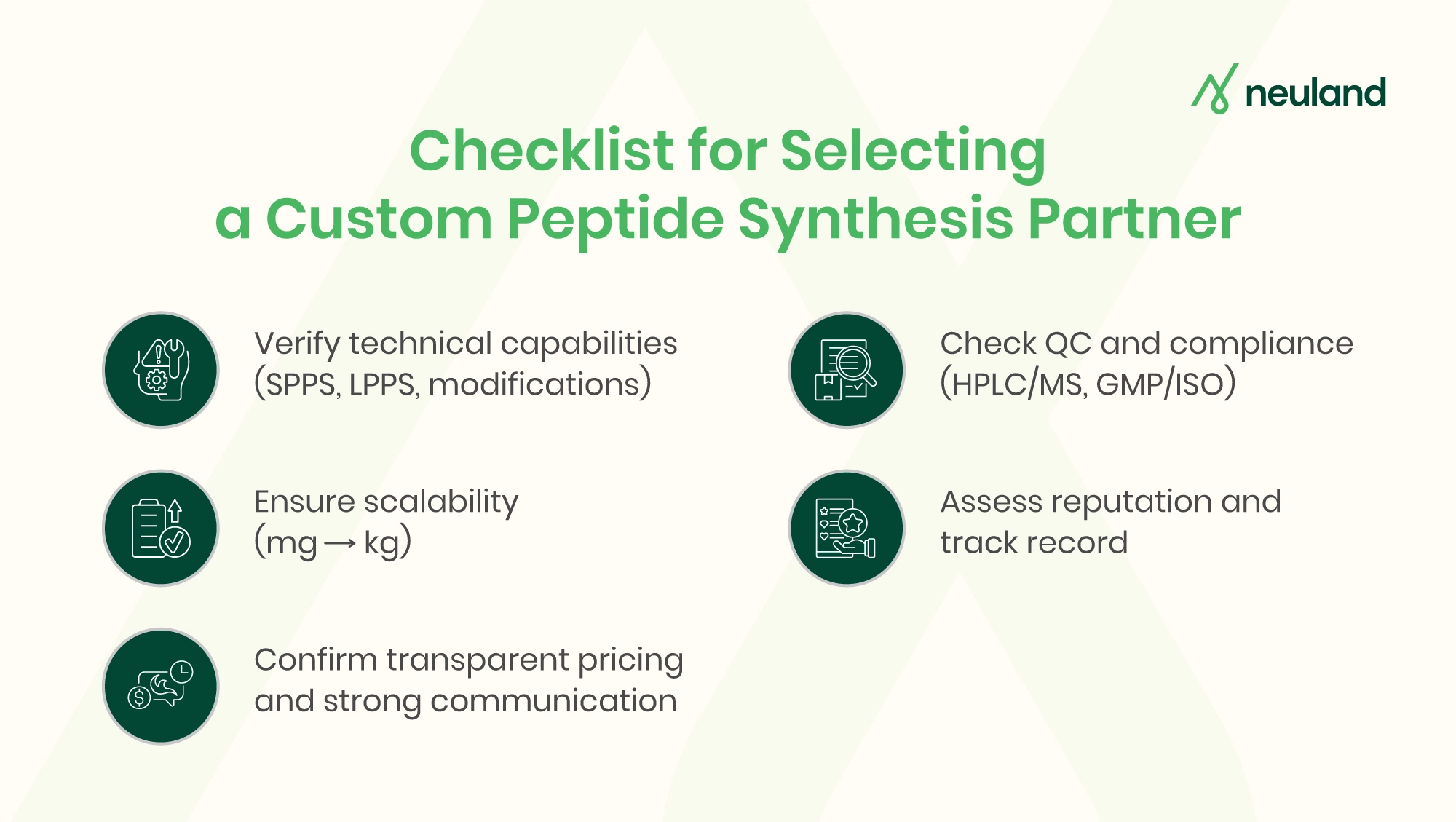
Picking the right external laboratory for peptide testing includes assessing several factors. A trusted laboratory needs to have verifiable experience in peptide chemistry evaluation-- for instance, PhD-level drug stores or biochemists on staff who recognize peptides' synthesis and degradation pathways. Accreditation by appropriate bodies (such as ISO/IEC or certification for GLP/GMP compliance) is a solid indication of high quality.
For scientists, acquiring verified peptides isn't simply a rule-- it's the structure of reliable experiments and research reproducibility. Poor-quality peptides (those with undiscovered contaminations, inaccurate series, or weakened parts) can result in misleading information and irreproducible outcomes. As a matter of fact, proteins and peptides are amongst one of the most extensively made use of lab reagents, yet researches have shown that their quality is often poor, leading to poor information reproducibility. Beginning with proper lab recognition is therefore an essential part of a scientist's quality assurance operations.Lack Of Efficient Techniques For Structural Adjustments And Series Verification
A lot of peptide providers and research labs depend on a number of well-established logical methods. All products are sold for research study, laboratory, or logical objectives only, and are except human usage. Item summaries and classifications do not suggest any restorative end results. At Chameleon Peptides, every product ships with comprehensive third-party screening documentation. You can discover more about our analytical testing procedures on our screening and top quality page. A 2016 study published in Nature located that more than 70% of scientists had tried and failed to reproduce one more researcher's experiments.What Hplc Can Not Show Alone
They are classified "for study use just" to make clear that they are meant for artificial insemination experiments or pet studies, not for any kind of type of human use. Actually, a laboratory offering peptide screening need to provide information fulfilling the rigorous logical expectations of firms like FDA and EMA [4] By utilizing a certified third-party laboratory, peptide suppliers or scientists guarantee an impartial and properly documented assessment of quality, which is precisely what assessors look for. Furthermore, recurring independent testing sustains compliance in set launch and quality assurance. Lab validation for peptides means using clinical tests to verify a peptide's identification, purity, and make-up. In technique, this frequently entails third-party or independent testing by an external laboratory to verify that a peptide item actually contains what the label declares [2]Various other techniques like electrophoresis, capillary electrophoresis (CE), and nuclear magnetic vibration (NMR) can likewise be used to assess peptide framework, cost, and purity, making certain comprehensive characterization. In COA testimonial, it normally includes HPLC pureness testing, mass spectrometry identification verification, and batch-specific documentation showing the checked lot, technique, results, and date. For peptide purity testing, reverse-phase HPLC is the conventional conceptual version. The chromatographic pureness is after that determined by contrasting the location under the major height with the total location under all incorporated optimals.
These can be particularly problematic since their chromatographic actions is really comparable to the target peptide, making them more challenging to separate during purification. When a peptide is 98% pure, that staying 2% isn't arbitrary sound-- it specifies, identifiable types of results. Mass spectrometry measures the molecular weight of a compound with severe accuracy. For peptides, the most usual strategies are electrospray ionization (ESI-MS) and matrix-assisted laser desorption/ionization time-of-flight (MALDI-TOF). HPLC divides a blend right into its individual components based upon just how each particle communicates with a specially designed column.What Do Pureness Levels 95%, 98%, 99% Mean?
- At Creative Peptides, we provide personalized peptide chemical and physical evaluations for research study teams that need dependable data on peptide identity, pureness, composition, remedy behavior, and example quality.
- A 95% purity means that out of every 100 "books" in your batch, 95 are ideal copies and 5 have some kind of mistake.
- This attaches directly with taking care of subjects such as peptide storage and peptide reconstitution.
- In vivo tests examine absorption, distribution, metabolic rate, and discharging (ADME) features, better verifying efficacy and safety.
- Mass spectrometry supplies molecular verification by identifying the specific mass of the peptide and any kind of co-eluting varieties or abbreviated series with high precision.